

Where DFW Roofs Actually Leak: The 6 Most Common Culprits
We've traced hundreds of DFW roof leaks. Spoiler: it's almost never the shingle field. Here are the six spots where water actually gets in — and how to spot them before the ceiling stains show up.
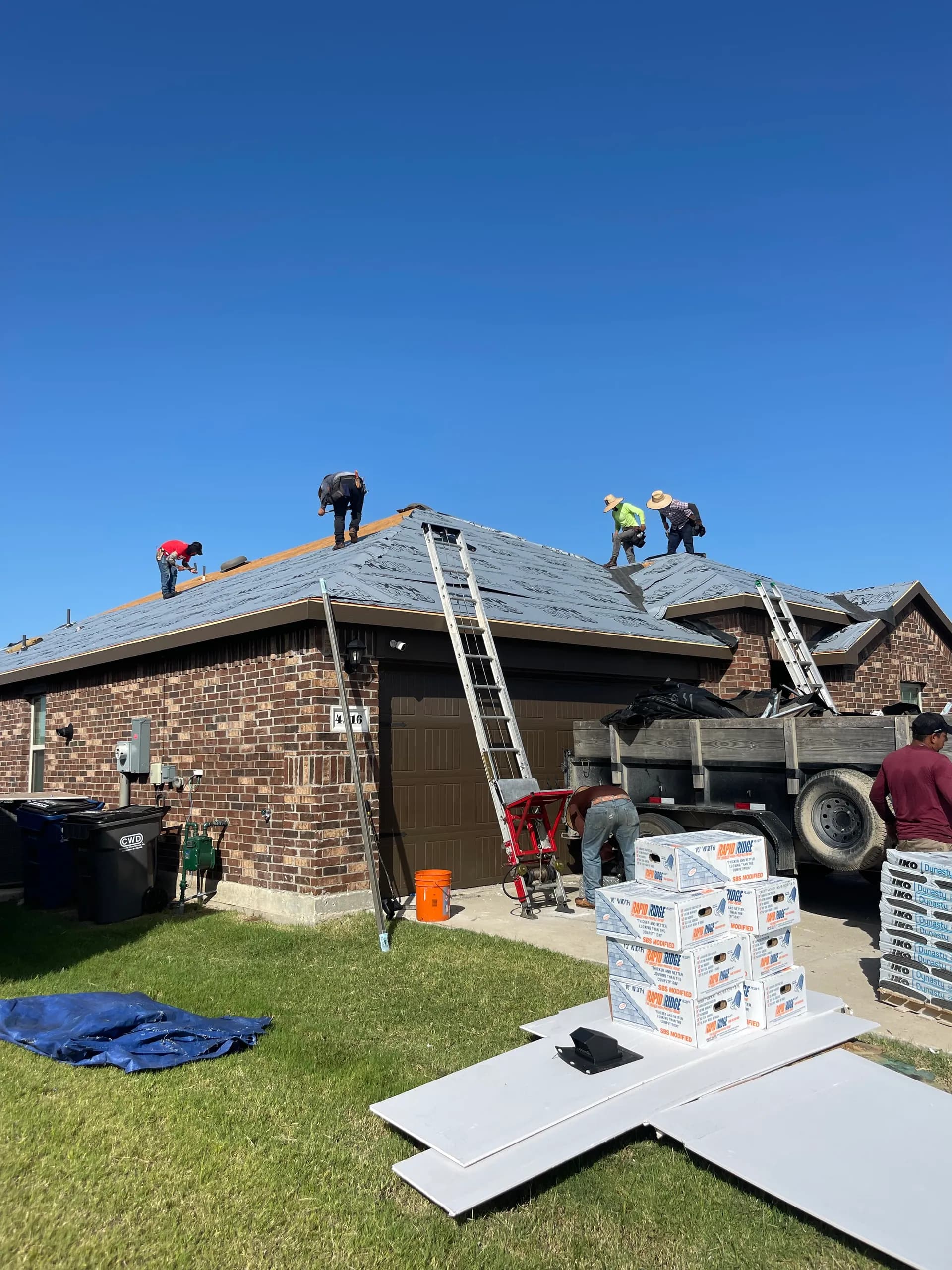
Homeowners assume roof leaks happen in the middle of the shingles. In 10+ years of tracing leaks across DFW, that's almost never where we find them. Here's where water actually gets in, ranked by how often we see it.
1. Pipe Vent Boots (30% of leaks)
The rubber collar around plumbing vent pipes dries out and cracks in Texas UV. Once it cracks, water enters around the pipe and tracks along the pipe to the attic.
The tell: Ceiling stain directly under a bathroom, kitchen, or laundry room.
The fix: $150–350 per boot, typically replaced with a metal-jacketed rubber boot or lead boot for 20+ year life.
2. Chimney Flashing (20% of leaks)
The metal flashing between the chimney masonry and the roof either separates, rusts, or has degraded sealant. On masonry chimneys, water also gets through failed mortar joints and tracks to the roof interface.
The tell: Water stain on the ceiling near the chimney, or stain on the drywall around the fireplace.
The fix: $400–1,200 for full reflash and counter-flashing. Includes cutting new reglets into the masonry and resealing.
3. Valleys (15% of leaks)
Where two roof planes meet. Most DFW roofs use "closed valleys" (shingles woven through) or "open valleys" (metal flashing visible). Over time, valley metal corrodes or shingles wear thin in the high-water-volume channel.
The tell: Ceiling stain in the middle of a room, especially on a ceiling below where two sections of roof meet.
The fix: $500–1,800 depending on valley length and whether open-metal flashing needs replacement.
4. Wall-Roof Transitions (10% of leaks)
Where the roof meets a vertical wall (common on split-level homes, bonus rooms, and attached garages). Step flashing should be woven into each shingle course; a lot of DFW builds have sloppy step flashing with reliance on sealant that fails in 5–10 years.
The tell: Water stain on interior walls at a wall-roof interface.
The fix: $600–2,500 depending on access. Proper step flashing replacement requires removing shingles back to the wall, installing new flashing, reinstalling shingles.
5. Skylights (10% of leaks)
Skylight flashing and seals fail in stages. First the rubber gasket around the glass panel, then the apron flashing at the bottom, then the step flashing at the sides.
The tell: Water around the skylight frame, often as streaks on the inside surround.
The fix: $300–1,500 depending on flashing type. Over 20 years old, often worth replacing the skylight unit rather than reflashing.
6. Ridge and Ridge-Cap (5% of leaks)
The cap shingles at the very top of the roof. Wind-driven rain or aged cap shingles let water into the attic. Ridge vents can leak if improperly installed.
The tell: Water stain in the attic rafters right at the ridge line, or ceiling stains near interior room peaks.
The fix: $300–900 to rework ridge caps. If the ridge vent is the issue, replacement runs $500–1,400.
What's NOT On This List
Shingle field failures (where water gets through the middle of a roof plane) are rare — maybe 3–5% of leaks we trace. The shingle field is the most-engineered, most-redundant part of a roof.
If a contractor tells you "your whole roof needs to be replaced" because of a single interior ceiling stain, ask them to point to the leak source first. Targeted repair almost always solves the problem.
How to Know If You're At Risk
Signs to watch for:
- Cracked rubber boots — visible from the ground or ladder
- Sealant visibly degraded or missing at chimney or skylights
- Valley shingles showing bare asphalt or lift
- Interior ceiling stains (even old, dried ones) — means water got in at some point
- Musty attic smell after rain
Emergency Leaks
Active leak during a storm: grab a tarp or trash bag, catch drips in buckets, call us. We do emergency tarping in DFW — typical response time 12–36 hours.
Don't let a plumber or general contractor "fix" a roof leak with caulk. It'll hold for 3–6 months and then the leak comes back worse.
Ready to Start?
Free on-site estimate — no pressure.
Typical callback under 24 hours across DFW.