

Hail Damage & Insurance Claims in Texas: What Actually Happens
A clear walk-through of filing a hail damage roof claim in Texas — what adjusters look for, how deductibles work, and what gets denied. From a DFW roofing contractor that handles claims every week.
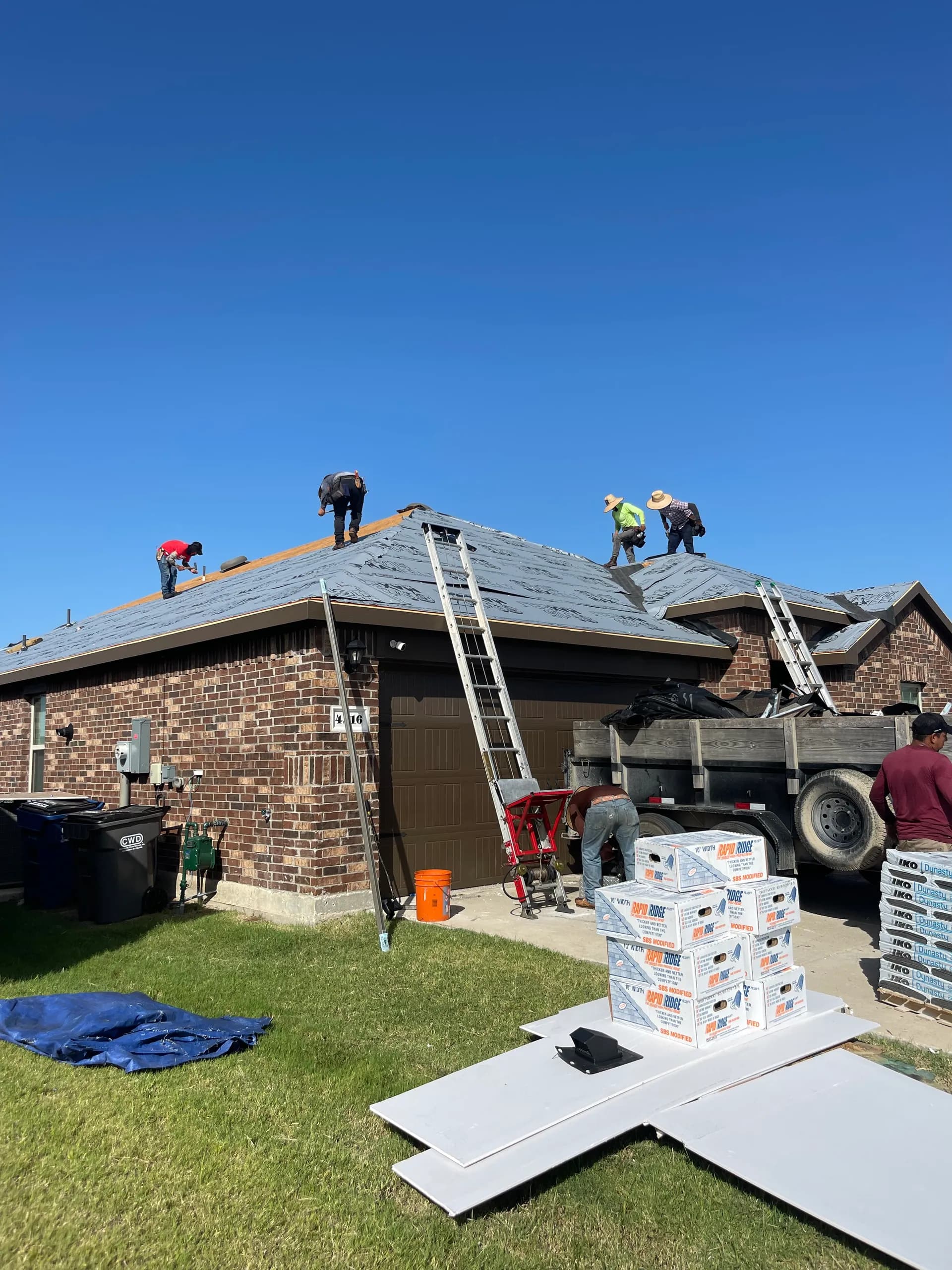
North Texas gets hit. Hard. Multiple hail events every storm season, straight-line winds, and the occasional tornado cell all leave damage on roofs that often isn't visible from the driveway. If you're about to file a hail claim — or trying to decide whether to — this is what actually happens from day one to final check.
The Very Short Version
- Document what you can see immediately after the storm.
- Call your insurance company. They send an adjuster.
- Get a roofer on-site before or with the adjuster.
- Adjuster writes a scope (usually in Xactimate).
- If the scope is short, your roofer requests supplements.
- Repairs or replacement happens. Your deductible is what you pay.
Step 1 · Document Immediately
The best evidence is photos taken right after the storm. Date-stamped via your phone. Shots of:
- Any visible roof or gutter damage from the ground
- Fallen tree branches
- Hail on the ground (the size relative to a quarter or golf ball)
- Dents on gutters, window screens, fences, grills, mailboxes — anywhere hail hits metal
- Any water staining on ceilings or attic sheathing
Don't get on the roof. Your insurance wants documentation, not an injury claim.
Step 2 · Call Your Insurance (Or Don't, Yet)
You have up to a year in most Texas policies to file, but reality is: if a storm hit your area, the carrier already knows. They'll send an adjuster out whether you've officially claimed or not.
Before you call, get a roofer to do a free inspection. Here's why: insurance adjusters are graders, not negotiators. If your roofer meets them on-site and walks the roof with them, the scope tends to be complete. If the adjuster goes alone, the scope tends to be... brief.
Step 3 · The Adjuster Meeting
An insurance adjuster for a residential hail claim will usually:
- Walk the roof and chalk-circle suspected hail hits
- Look for bruising (dark, slightly softened spots where the granule layer is compromised)
- Count "hits per test square" — traditionally 8+ hits in a 10'x10' square equals replacement
- Check gutters, fascia, window screens, and soft metal on the AC unit for collateral damage
- Look at vent boots, pipe jacks, and flashing for impact damage
The adjuster then writes the scope in Xactimate — the industry-standard estimating software. Most carriers use Xactimate prices pulled from a regional database.
What gets missed:
- Detached garage roofs
- Shingles on the backside of dormers (adjusters sometimes skip the harder-to-walk areas)
- Ice and water shield code upgrades
- Drip edge code upgrades
- Ridge ventilation replacement
- Decking replacement (written as "as needed" rather than actual quantity)
- Matching shingle/siding replacement when the partial-match can't be color-matched
When your roofer is on-site with the adjuster, these items get caught. When you're alone, you're trusting that the adjuster — who is grading a roof they've never seen on a house that's not theirs — catches everything.
Step 4 · Understanding the Scope
After the inspection, you'll get a claim summary that typically has:
- RCV (Replacement Cost Value): What it costs to replace the damaged items new-for-new
- ACV (Actual Cash Value): RCV minus depreciation (the "used value")
- Depreciation: Withheld until work is done
- Deductible: What you pay out of pocket
- Net check: RCV minus depreciation minus deductible (the first check)
After work is completed and you submit proof (final invoice + photos), the carrier releases the depreciation — the second check.
Example Numbers
- RCV: $18,400
- Depreciation: $3,800
- ACV: $14,600
- Your deductible: $3,000 (1% on a $300K home is typical in TX)
- First check: $11,600
- Work is completed
- Depreciation released: $3,800
- Final check: $3,800
- Total received: $15,400
- Out-of-pocket: $3,000 (your deductible)
Step 5 · Supplements
If the adjuster's scope is short — missing items, incorrect prices, or a repair scope that should be a replacement — your roofer can file a supplement. This is a formal request to update the scope with additional line items, backed by photos and Xactimate references.
Supplements are normal. On a typical full-replacement DFW claim, a supplement adds $1,500–$6,000 to the scope for things the adjuster didn't initially include (code upgrades, additional decking, missed accessories).
What Gets Denied
Not every hail claim results in an approved replacement. Common denial reasons:
- Wear and tear mistaken for hail: Aging shingles lose granules naturally. If the "hail hits" can't be differentiated from normal aging, denial.
- Cosmetic damage only: If the functional integrity isn't compromised, some carriers only cover cosmetic damage as a partial replacement.
- Pre-existing damage: If prior hail was documented before your current policy started, that portion isn't covered.
- Lack of photos: No date-stamped storm evidence = hard to prove timing.
- Wind/hail exclusion on policy: Some North Texas policies now have separate wind/hail deductibles — 1%, 2%, or 5% of dwelling value. Higher deductible, higher threshold for filing.
If your claim is denied and you believe it shouldn't be, you can request a reinspection with a different adjuster, or engage a public adjuster (licensed third party who represents you for a % of the recovery).
Important note: Roofers in Texas cannot legally negotiate claims on your behalf. We can document damage, meet with adjusters, and request supplements as your contractor — but we can't act as your representative in claim negotiations. That's reserved for public adjusters and attorneys.
Will a Hail Claim Raise Your Rates?
In Texas, hail damage claims are generally classified as "Act of God" weather claims, which don't count against your individual record the way at-fault claims do. However: if your entire neighborhood got hit, your carrier may raise rates regionally or non-renew policies across their entire Texas book.
Your agent is the final word on your specific policy. But as a rule of thumb: if a storm hit your area, file. Not filing doesn't prevent a rate increase if the carrier already knows about the storm.
How Long Does a Claim Take?
- Initial inspection: 1–3 weeks after storm
- Adjuster report: 2–5 days after inspection
- First check: 1–2 weeks after report
- Roofing work: 1–4 days once scheduled
- Depreciation release: 1–3 weeks after proof of completion
End-to-end for a typical DFW hail claim: 6–10 weeks.
Start With a Free Inspection
We do free post-storm inspections across DFW with documented photos, drone imagery for hard-to-walk roofs, and a written report you can use whether you move forward with a claim or not. If you file, we meet your adjuster on-site.
No-fee until the claim is approved where applicable, and honest-feedback guarantee: if the damage is minor and doesn't warrant a claim, we'll tell you that.
Ready to Start?
Free on-site estimate — no pressure.
Typical callback under 24 hours across DFW.