

Composite Decking in Texas: Trex vs TimberTech vs Fiberon
The three major composite decking brands compared for DFW heat, UV, and long-term durability. Honest pros and cons of each, plus what we'd install on our own homes.
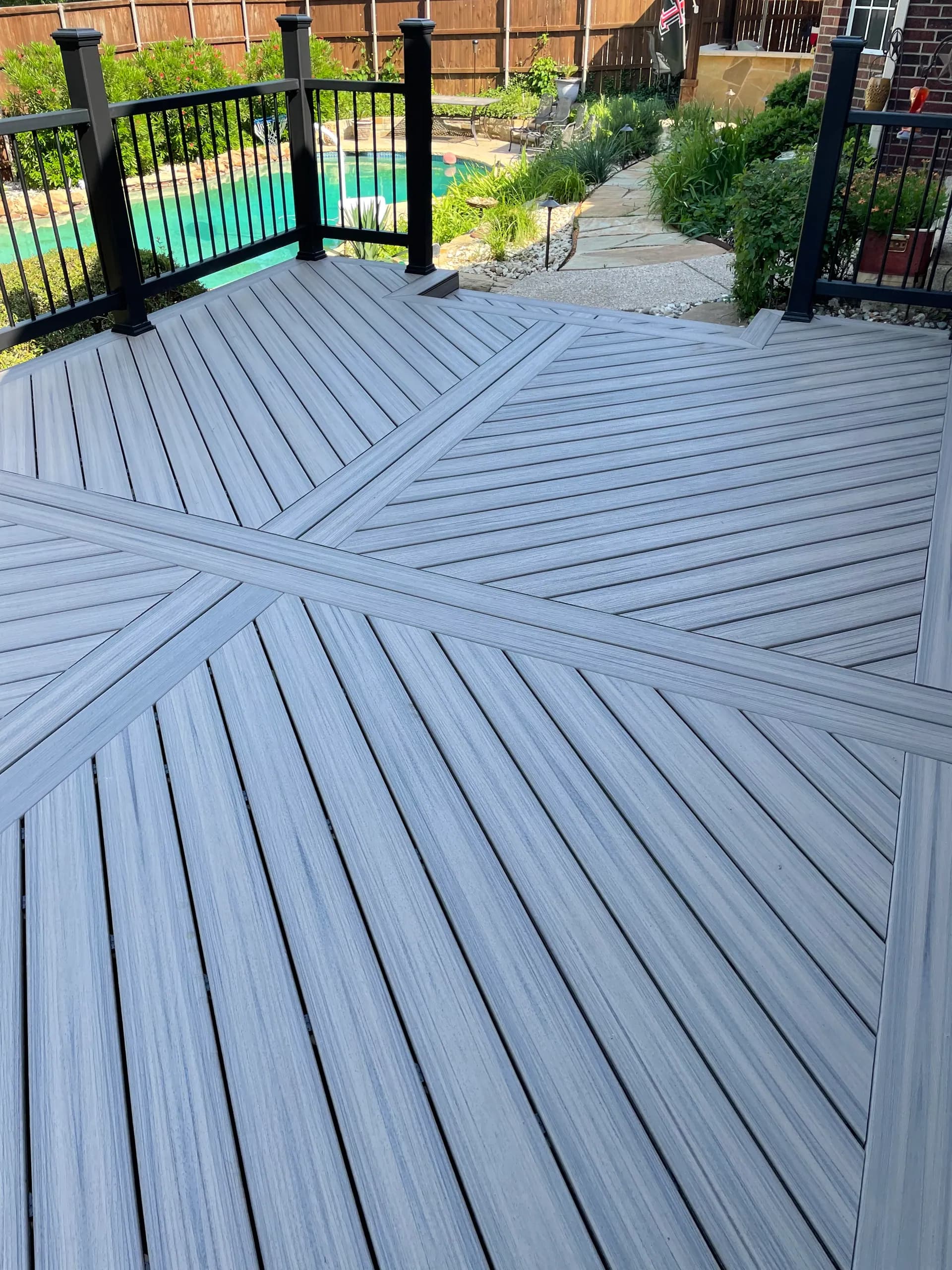
Composite decking has taken over the DFW market for one reason: Texas sun destroys wood decks faster than owners can re-stain them. The three brands you'll actually evaluate are Trex, TimberTech, and Fiberon. Here's how they compare where it matters.
The Texas Heat Test
Surface temperature on a 100°F day:
- Light-color composite: 120–135°F (walkable barefoot with some hesitation)
- Dark-color composite: 145–165°F (too hot to stand on)
- Natural hardwood: 110–125°F (cooler, but fades fast)
All three brands offer cool-deck or heat-mitigating technology in their premium tiers. Color choice matters more than brand for heat.
Trex
The most-installed composite in DFW. Three tiers:
- Trex Enhance (entry-level): 25-year fade/stain warranty, capped on three sides
- Trex Select (mid): Better color range, similar performance to Enhance
- Trex Transcend (premium): 25-year limited warranty, capped on four sides, best color stability
Pros:
- Widest availability — every DFW lumber yard stocks Trex
- Good warranty record — claims get processed
- Color options work well with DFW architecture (Tiki Torch, Havana Gold, Spiced Rum)
Cons:
- Enhance tier fades noticeably in direct Texas sun over 8–12 years
- Premium tier (Transcend) is priced close to TimberTech AZEK
- Some color lines discontinued without notice — matching later additions is hit-or-miss
TimberTech
The quality play, particularly their AZEK PVC line.
- TimberTech PRO (capped composite): Direct Trex competitor
- TimberTech AZEK (full PVC): Non-wood-fiber core, best thermal stability
Pros:
- AZEK line handles Texas heat better than any capped composite
- Color saturation holds through 15+ years of UV
- Cool-deck technology option drops surface temp 10–15°F vs competitor darks
- Best warranty terms in the premium category (limited lifetime on AZEK)
Cons:
- 15–25% more expensive than Trex for comparable tier
- Fewer DFW stocking dealers than Trex
- PVC has a slight "composite" feel some clients don't love — hardwood-look lines help
Fiberon
The budget-to-mid-tier alternative.
- Fiberon Good Life (entry)
- Fiberon Sanctuary / Paramount (mid/premium capped composite)
Pros:
- Competitive pricing — typically 10–15% below Trex
- Good color range including some distinctive looks
- Warranty terms comparable to Trex
Cons:
- Less DFW availability — some color lines require special order
- Performance in heat is middle-of-the-pack (not bad, not exceptional)
- Smaller market share = less installer familiarity
Decision Framework
Trex Transcend or TimberTech AZEK — long-term ownership (15+ years), willing to pay for it. AZEK wins on heat, Transcend wins on availability.
TimberTech PRO or Fiberon Paramount — good quality, more budget-aware, comparable performance.
Trex Enhance or Fiberon Good Life — short-term ownership or a smaller deck, willing to accept faster fade.
Skip entirely: Any composite under 25-year warranty. Pressure-treated wood is a better budget option than low-tier composite.
Color Selection for Texas
Lighter grays and browns run 20–30°F cooler than dark colors. Our usual DFW specs:
- Gray tones: Trex Gravel Path, TimberTech Driftwood, Fiberon Warm Sienna
- Brown tones: Trex Havana Gold, TimberTech Antique Leather
- Avoid in full sun: Any color labeled "espresso," "ebony," or "black" — they cook
Installation Details That Matter More Than Brand
A great composite install lasts 25 years. A sloppy install on the same product fails at 8.
- Hidden fastener system (Cortex plugs, Trex Hideaway, Starborn) — no visible screw pops
- Proper joist spacing — 12" o.c. minimum for most composites, 16" for high-end PVC
- Gapping between boards (1/8–1/4") for thermal expansion
- Picture-frame border with mitered corners reads intentional
- Ledger flashing done correctly — #1 cause of rot at the house
- Post bases elevated on concrete footings below frost line
What This Costs in DFW
For a typical 400 sq ft deck installed with hidden fasteners, composite fascia, and railing:
- Entry composite (Enhance / Good Life): $28,000 – $36,000
- Mid composite (Transcend / TimberTech PRO): $36,000 – $48,000
- Premium PVC (AZEK): $44,000 – $58,000
Railings and stairs add meaningfully to cost — a deck with aluminum composite railing and a full stair run can push $10–15K over base deck pricing.
Ready to Start?
Free on-site estimate — no pressure.
Typical callback under 24 hours across DFW.