

When to Repair vs. Replace Your Roof (The Honest Answer)
Most contractors want to replace. Here's how to actually tell whether your DFW roof needs a full replacement or a targeted repair — from a company that does both.
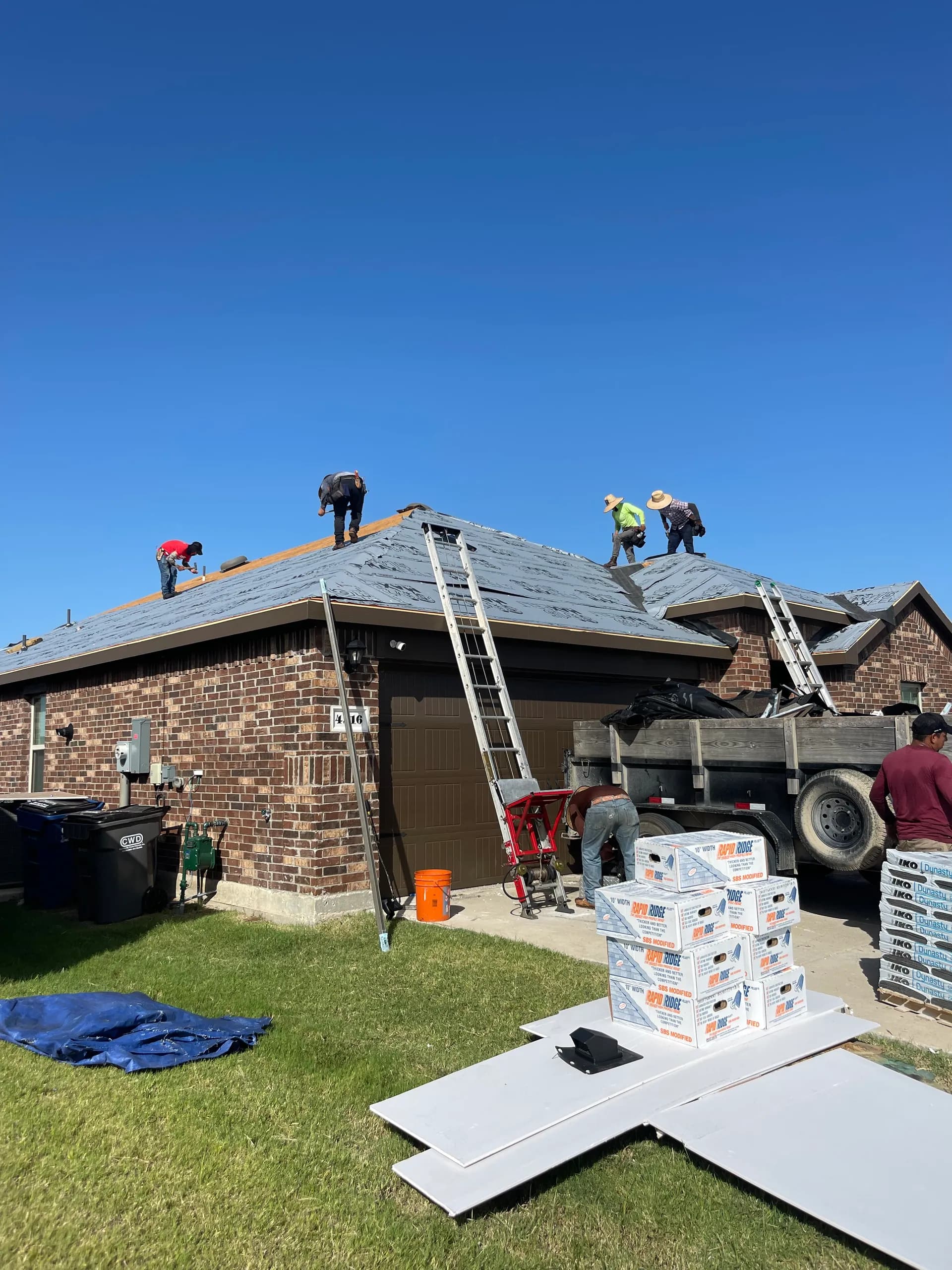
The honest answer: most roof problems don't need a full replacement. Most contractors want to replace because the check is bigger. Here's a framework for making the call correctly.
The Five Questions
1. How Old Is the Roof?
| Age | Your answer |
|---|---|
| 0–10 years | Repair. Full replacement is almost never justified. |
| 10–15 years | Usually repair. Unless widespread damage. |
| 15–20 years | Case-by-case. Factor in the specific damage. |
| 20–25 years | Leaning toward replacement, especially if insurance is in play. |
| 25+ years | Replace. Even without damage, you're past warranty and on borrowed time. |
Asphalt shingle lifespan in DFW: 20–30 years for architectural, 15–20 for three-tab. Bonus heat and UV exposure ages them faster than coastal or cooler climates.
2. How Widespread Is the Damage?
Localized (< 10% of roof area): Repair.
Widespread (30%+): Replace.
In-between: The judgment call — weigh age, insurance availability, and how many more repairs you'd need in the next 2–3 years.
One damaged valley, a couple of flashing issues, a vent boot leak — all repair-scope. An entire slope with hail impact, multiple leak sites, and visible shingle aging — replace.
3. Is the Decking Compromised?
If wood decking underneath is rotted, soft, or delaminating, that's beyond a shingle problem. A repair doesn't fix decking; only a tear-off reveals it.
Signs of decking issues visible from the ground or attic:
- Sagging rooflines
- Interior leaks that keep coming back
- Visible water stains on attic sheathing
- Soft spots when walked (not DIY — roofers check this)
4. Are You Currently Leaking?
Active leak = repair immediately, regardless of the long-term plan. A tarp and emergency repair buys time. After the water stops, reassess with a roofer on-site.
5. Is Insurance Involved?
This one's different. If you have a storm claim approved or pending, and the adjuster has written a replacement scope, replace. You'll rarely get a better opportunity to replace the roof at partial cost. A repair scope in this situation leaves money on the table.
Repair Scopes We Do Every Week
- Vent boot / pipe jack replacement — #1 leak source in DFW roofs. Rubber collars dry out and crack in 8–12 years. $350–650 per boot.
- Flashing repair — step flashing at wall intersections, counter-flashing at chimneys. $450–1,400 depending on scope.
- Valley reseal or replacement — open metal valleys and woven shingle valleys both fail eventually. $600–2,500.
- Ridge cap replacement — specifically high-wind areas (Keller, Flower Mound, north-side homes in Frisco) lose ridge caps. $400–900.
- Isolated shingle replacement — hail-damaged sections, wind-blown pieces. $200–1,200.
- Emergency tarp + temporary dry-in — $350–700, credits toward the real repair.
A proper repair should hold 5+ years, often 10+. Properly done, it's not a Band-Aid.
When Replacement Makes Sense Even on a Younger Roof
Not every replacement is old-roof-related:
- Multiple prior repairs. If you've had 4+ repairs in 3 years, patterns are telling you something. Replace.
- Failed product recall. Some DFW homes had GAF or IKO batches from 2008–2012 that failed early. Class-action-eligible; replacement usually prepaid.
- Ventilation issues causing shingle curl. If the attic isn't venting properly, shingles curl and lift regardless of age. Replace + fix ventilation.
- Insurance-approved scope. Already covered above.
- Selling the home. If the buyer's inspection flags the roof, and it's in the 15+ year range, replacing adds more to sale price than repair.
What a Repair Estimate Should Include
If a roofer quotes a repair, it should specify:
- The exact issue (e.g., "3 failed vent boots, east elevation")
- Materials (brand, type, count)
- Workmanship warranty term (minimum 1 year on repair work)
- Scope boundaries (what's included and what's out)
- Pricing — ideally flat-rate, not time-and-materials
If the repair estimate is vague or hand-written with a single number, keep looking.
What a Replacement Estimate Should Include
See our cost guide for the full breakdown, but at minimum:
- Shingle brand, model, color
- Underlayment type
- Ice & water shield coverage
- Drip edge spec
- Ridge venting plan
- Workmanship warranty term
- Decking replacement protocol
- Permit fee inclusion
Honest Recommendation Framework
This is what we tell homeowners after a free inspection:
- If the roof is <15 years old and damage is localized: Repair. We'll quote the repair.
- If insurance has approved a replacement: Replace. We'll help coordinate.
- If the roof is 15–20 with moderate damage: Repair now, plan for replacement in the 3–5 year window.
- If the roof is 20+ or widely damaged: Replace.
We do both. We don't steer toward replacement when it's not needed. Honest inspections are how we've built the 300+ project pipeline — homeowners come back and refer because we told them "you don't need a new roof" the first time.
Get a Free Inspection
We'll walk the roof (or fly a drone if it's steep), document what's there, and tell you exactly what we'd do. No pressure on replacement. Schedule via the quote form.
Ready to Start?
Free on-site estimate — no pressure.
Typical callback under 24 hours across DFW.