

7 Signs Your DFW Roof Needs Attention Right Now
Early warning signs that your roof needs inspection — from the ceiling spot you ignored to the granules in the gutter. Spot them before they become claims.
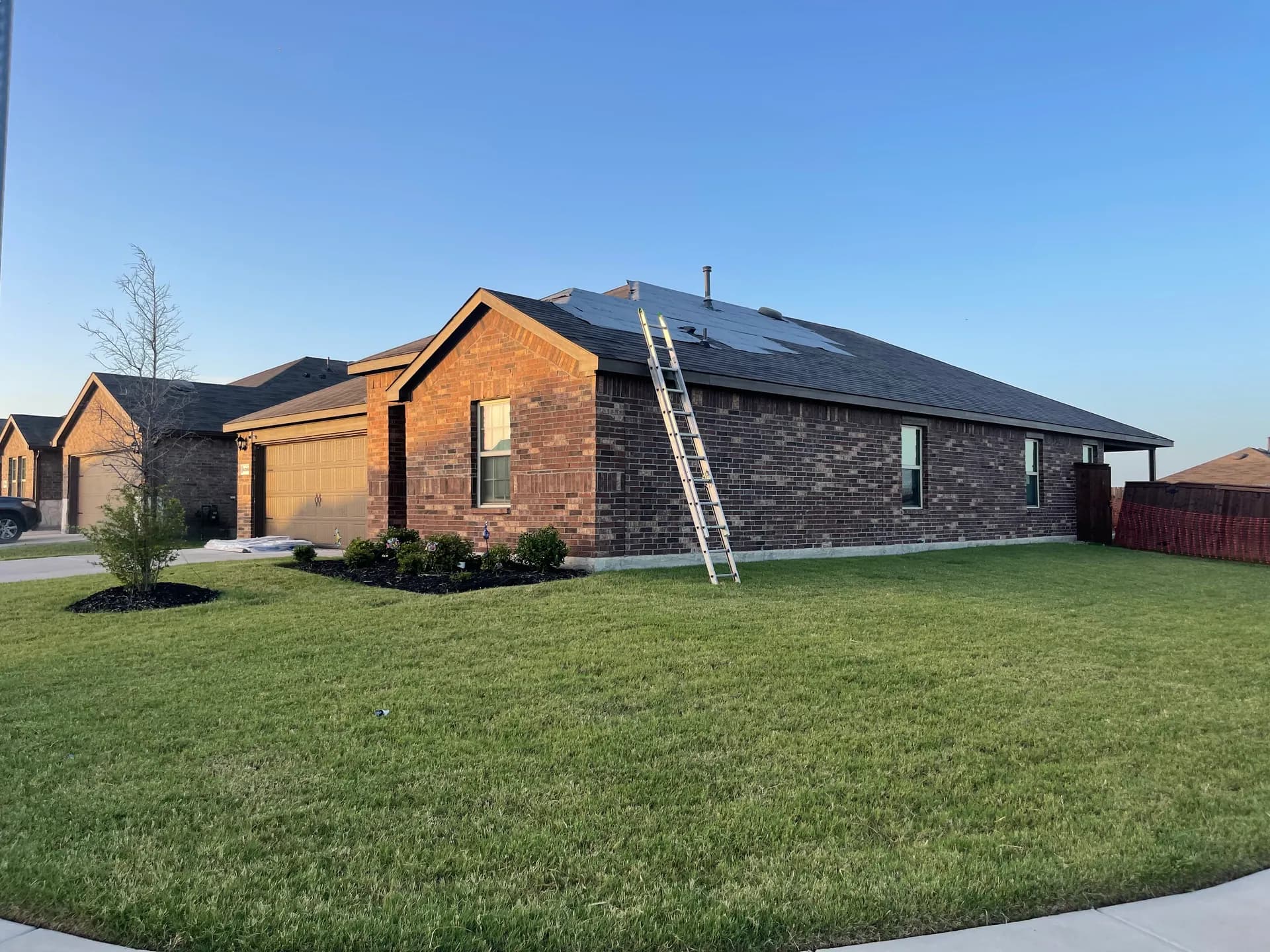
Most catastrophic roof failures were preventable. The warning signs were there 6–18 months before the interior started showing damage. Here are seven to watch for — three you can see from the ground, four you'll notice inside or in the gutters.
1. Granules in the Gutter
If you're pulling granule sludge out of your gutters or downspouts, your shingles are losing their UV-protective granule layer. Some granule loss is normal for the first 6 months after install. After that, significant granule loss means shingles are aging — or were damaged by hail.
Action: Get an inspection. If the granule loss is widespread, replacement is likely within 1–3 years.
2. Missing, Curled, or Lifted Shingles
From the ground, look for:
- Missing tabs along the edges (wind damage)
- Curled edges — shingles that look like they're peeling up (heat / age)
- Lifted corners that flap in the wind (failed adhesion or nail pops)
- Dark streaks (algae growth — cosmetic but indicates moisture retention)
Any of these individually = repair. All of these across multiple slopes = replacement.
3. Sagging Rooflines
Stand across the street and look at the ridgelines and eaves. They should be dead straight. If they sag, dip, or bow anywhere, the decking underneath is compromised — water damage, rot, or structural issue.
Action: Do not wait. Sagging = structural problem. Inspection ASAP.
4. Water Stains on Interior Ceilings
Tan or brown rings on ceilings or upper-wall sections are a late-stage symptom. By the time you see interior staining, water has been getting in for weeks to months.
Common stain locations in DFW:
- Around chimneys (flashing failure)
- Around bathroom exhaust fan boots
- Around attic access panels
- In the top corners of rooms directly under valleys
Action: Call a roofer within a week. Active leak = temporary repair or tarp until a full scope can be done.
5. Daylight Through the Attic Deck
Go up in the attic during daytime with the lights off. If you see pinpoints or cracks of daylight coming through the decking, there are holes in the roof surface or gaps in flashing.
You'll also see:
- Dark staining on rafters or sheathing — moisture intrusion
- White efflorescence on framing — ongoing moisture
- Soft or deteriorated wood around penetrations
Action: Inspection. The damage is already progressing.
6. Failed Pipe Boots
The rubber collars around plumbing vent pipes (pipe jacks / vent boots) are the #1 leak source on DFW roofs. They dry out, crack, and fail at 8–12 years — long before the shingles themselves fail.
From the ground or a ladder:
- The rubber boot should be flexible, dark, and tight around the pipe
- Cracks around the pipe = failed boot
- Discoloration or white chalkiness = UV degradation
Action: Replacement is a quick $350–650 fix. Left alone, you get water damage to the bathroom or utility room below.
7. Storm Damage That "Looks Fine"
The most insidious DFW roof damage: post-storm impact that looks fine from 20 feet but has bruising, granule loss, or fractures on the shingle surface visible only on the roof.
Signs from the ground:
- Dents on gutters, AC unit, window screens, mailbox, grill
- Fresh dark streaks or darker patches on the roof from above
- Hailstones remaining on the roof surface a day after the storm
If your neighborhood got hit by a hail event, don't assume you're fine because you don't see damage. Bruising doesn't show up from the ground.
Action: Free post-storm inspection. Document everything. If you file an insurance claim, getting a roofer on-site with the adjuster is crucial (see our insurance claims guide).
What a Real Inspection Covers
When we inspect a DFW roof, we walk (or drone-fly, for steep/slick roofs) every slope and document:
- Shingle condition — curling, granule loss, impact marks, bruising
- Flashing — step flashing, counter-flashing, chimney, skylights
- Pipe boots / vent collars — condition and age
- Valleys — metal or woven, sealing, debris
- Ridge / hip caps
- Ventilation — ridge vent, gable vents, soffit intake
- Drip edge — presence, condition
- Gutters — slope, sealing, granule accumulation
- Fascia and soffit — visible rot or moisture
- Attic (when accessible) — decking stains, framing moisture, insulation compression
Report is written with photos, explanation of anything found, and honest recommendations — including "nothing needs to be done" when that's the answer.
Free DFW Inspections
We don't charge for inspection. If you're selling the house, refinancing, just bought the property, or noticing any of the seven signs above — call or schedule online. Typical inspection window: 2–3 business days from your request.
Ready to Start?
Free on-site estimate — no pressure.
Typical callback under 24 hours across DFW.